Many
cultures have their own style of dumpling. There is the Jewish kreplach,
the Italian ravioli, the Polish pierogi, the Korean mandoo and the Japanese
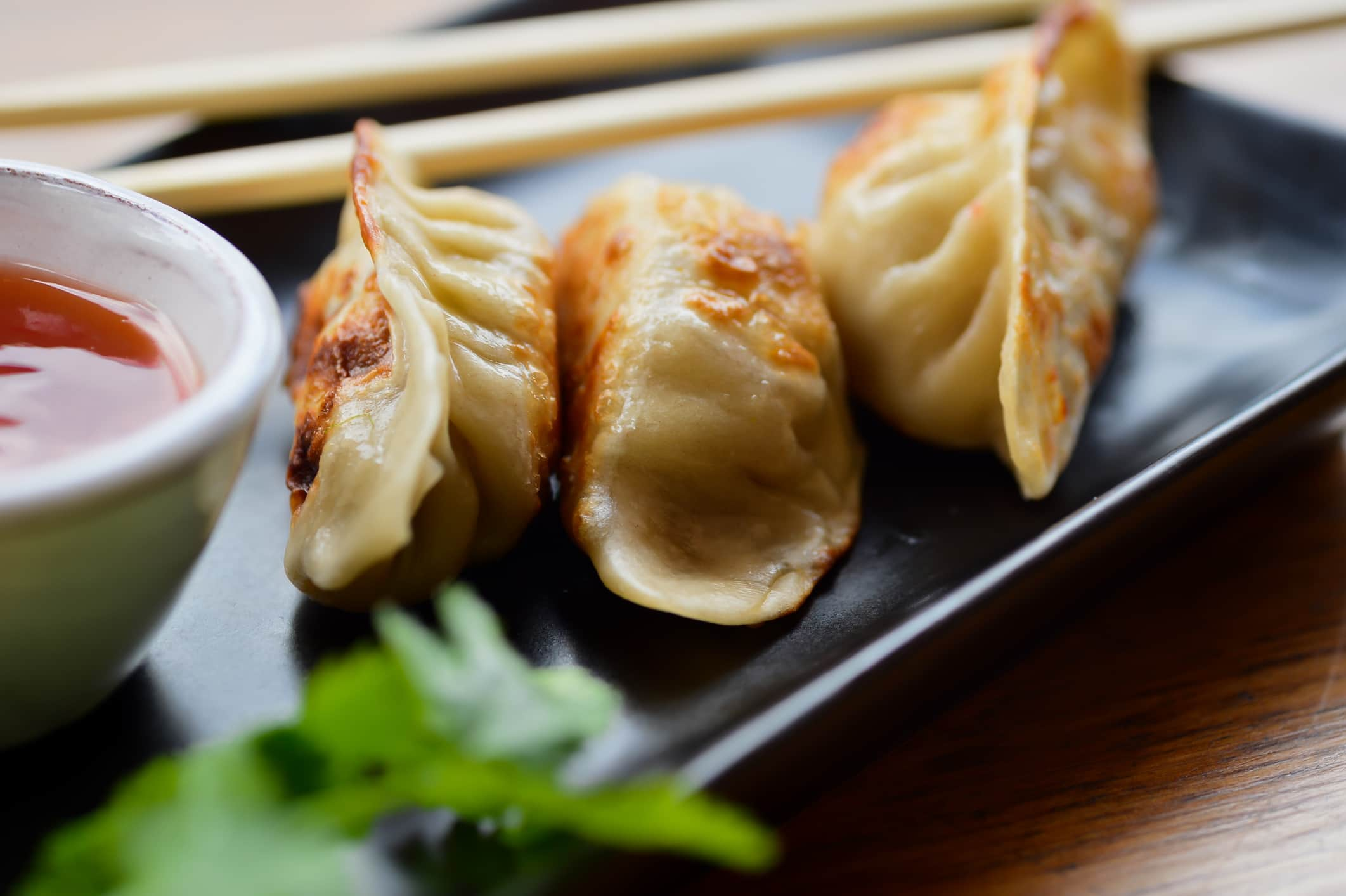
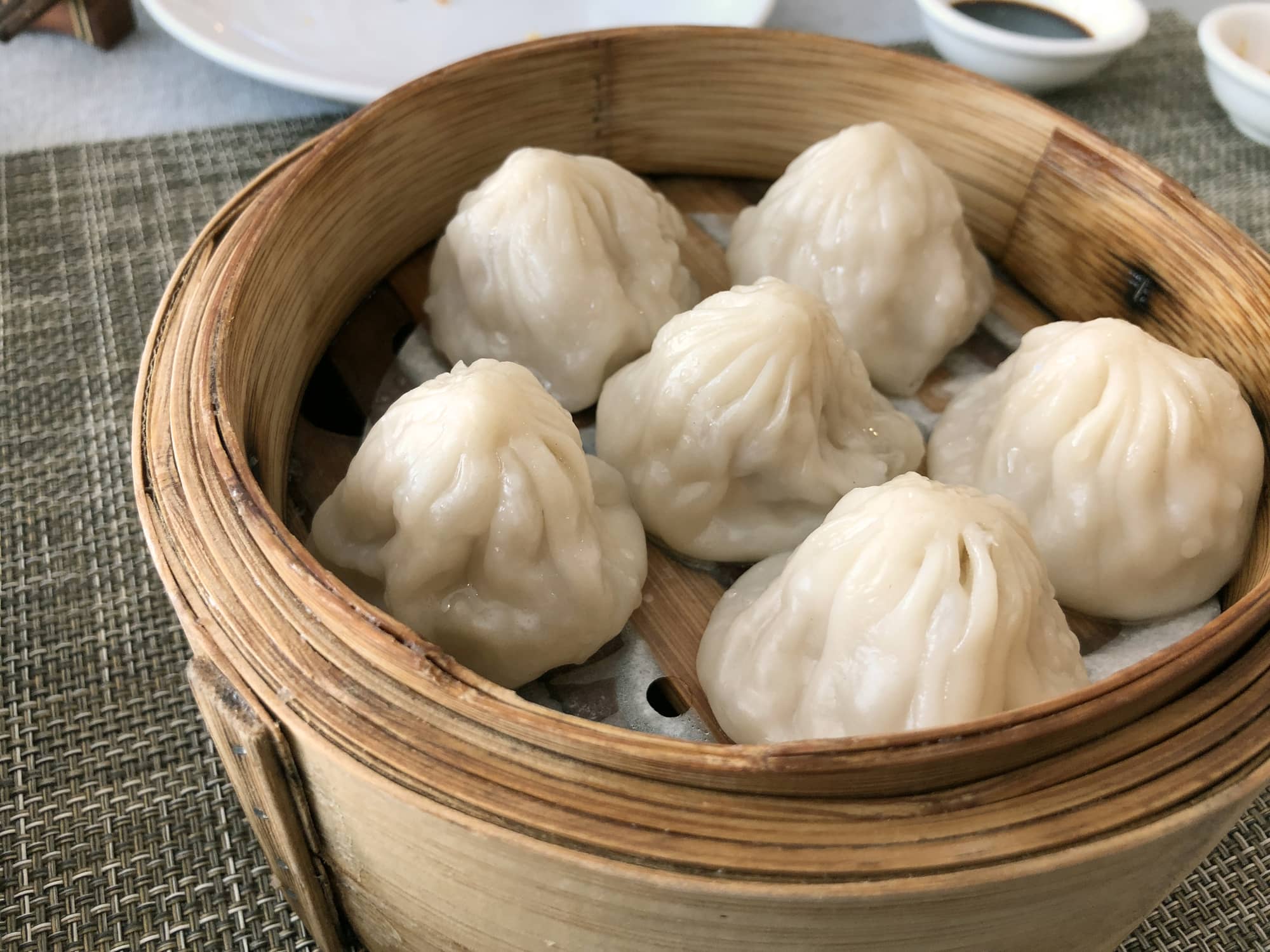
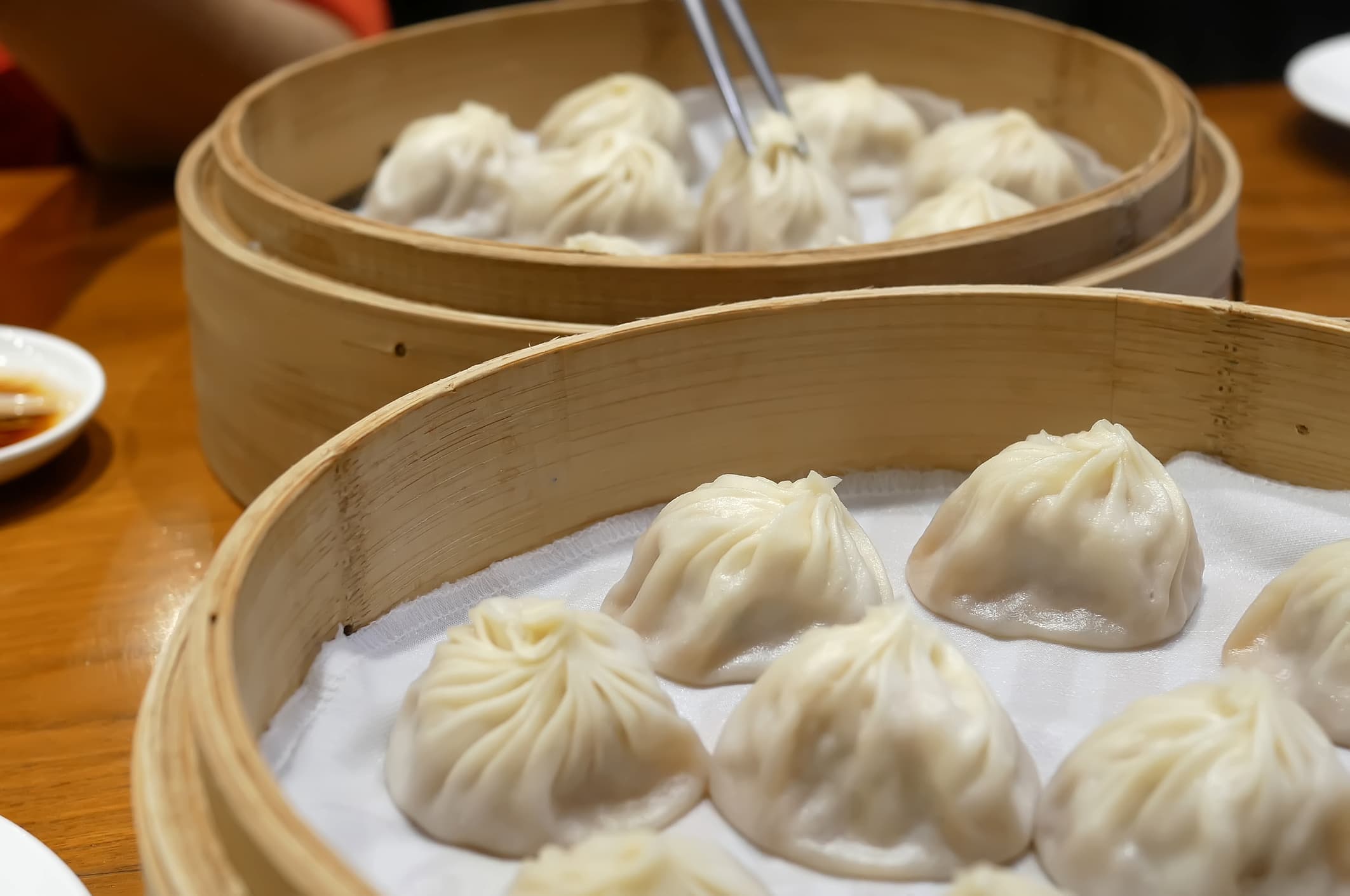
gyoza...just to name a few. These bite-sized delicacies are perfectly
proportioned mixes of meat, vegetables and dough — boiled, fried
or steamed.
DUMPLING MAN serves dumplings in
the classic northern Asian style. Some of the earliest writing about these
dumplings dates back 1400 years to northern China. This popular dish was
later introduced in Korea and Japan virtually unchanged. In fact, the
names mandoo and gyoza are both phonic translations from the Chinese language.
Cultures in southern Asia also picked up on this traditional dish, adding
rice flour to create more translucent dumplings.
Northern
Asian dumplings differ from their Western cousins both in their fillings
and their dough. The filling is prepared using a technique called
Shang-Jian where the protein-rich ingredients are beaten with herbal
juices. This helps to infuse the filling with moisture and fragrance,
and provides
a pleasant texture. The dough is made of water and flour, with no eggs
or butter (this makes our veggie dumplings truly vegan-friendly). Without
the aid of eggs, several stages of kneading are required to create
a full-bodied
dough. A more complicated process of dough preparation, called Tang-Mian,
involves adding boiling water. This results in a subtle sweetness and
a softer texture — ideal for searing or steaming. You might wonder
why we don't call the seared dumplings "fried." Searing
takes significantly less fat and relies mostly on the cooking power
of steam.
Another unique aspect of authentic northern Asian dumplings is how the
wrappers are rolled. Western dumplings use a circle-cutter or pasta wheel
to divide the sheet of dough. Our wrappers are painstakingly rolled out
individually. Every wrapper has a thin edge and a fuller center, so that
the seam on the dumplings is the same thickness as the bottom — making
it a lot less doughy. Many dumpling makers ignore this step in exchange
for the convenience of machine-cut product. Unfortunately, this has led
to Asian dumplings being thought of as heavy. You will never find heavy,
doughy dumplings at DUMPLING MAN
.
The beautiful colors of some of our dumplings come from vegetable juice.
Fresh-squeezed juice doesn't sustain its color for long. In addition,
once the filling has been "beaten," it has to be made into a
dumpling quickly, otherwise the herbal juices will begin to seep out.
These production hurdles assure you that every dumpling served here is
fresh.
|